
Mepeed Bali: Traditional Balinese Ceremony Explained
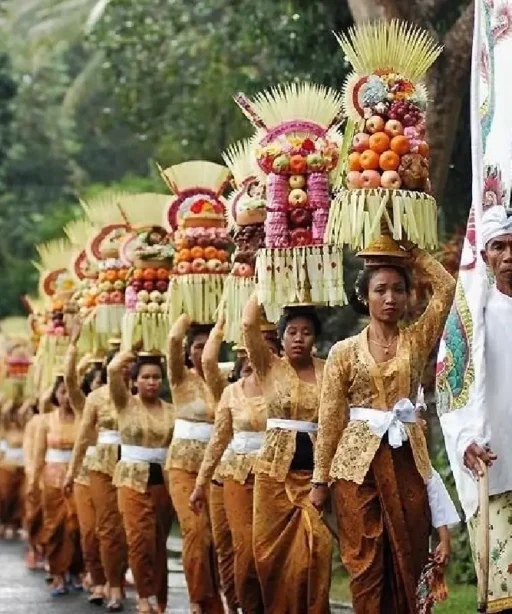
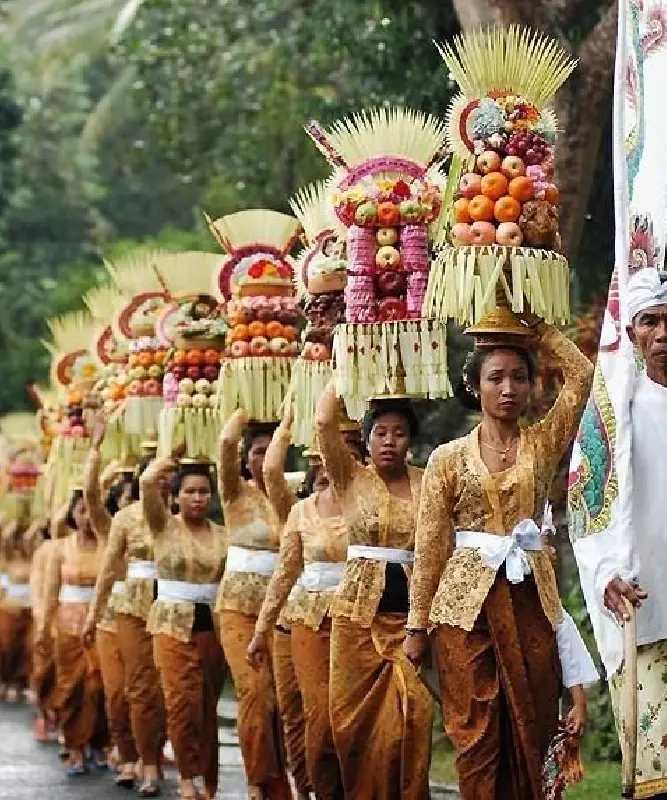
The Mepeed Bali ceremony is one of Bali’s most unique and fascinating cultural traditions, celebrated to honor ancestors and maintain spiritual harmony within the community. Derived from the word “peed,” meaning “to walk in line,” this traditional Balinese ritual features women—from children to young adults—walking gracefully in neat rows while balancing towering gebogan offerings made of fruits, traditional cakes, young coconut leaves, and flowers.
Moreover, the Mepeed Bali ceremony usually forms part of Piodalan (temple anniversary days) held every 210 days, expressing gratitude to Ida Sang Hyang Widhi Wasa and strengthening communal bonds.
🌺What Is the Mepeed Bali Ceremony?
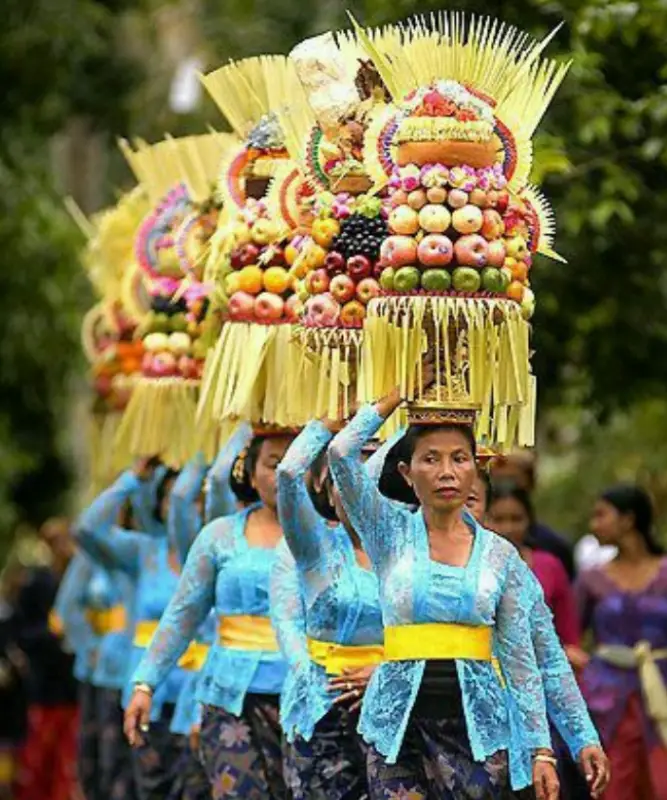
The Mepeed Bali ceremony represents a traditional Balinese ritual that emphasizes discipline, harmony, and devotion. In practice, the procession involves women wearing white kebaya and selendang shawls, walking in unison to the sound of gamelan music.
Meanwhile, the participants head toward village temples to collect tirta (holy water). Therefore, the ceremony is not only visually beautiful but also spiritually meaningful for the entire community.
Read More Exploring Balinese Culture: Places, Arts, and Daily Life
🌺Why the Mepeed Bali Ceremony Matters in Balinese Culture
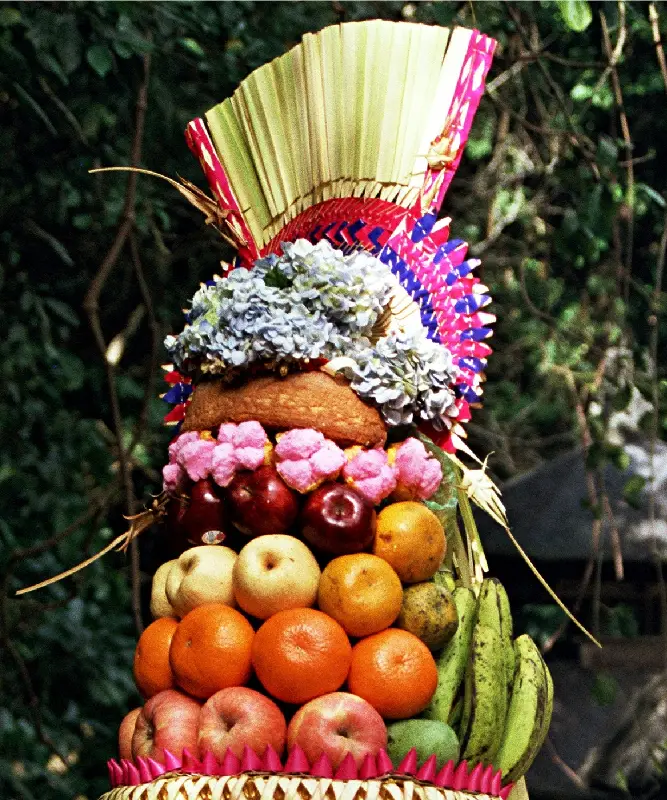
The Mepeed Bali ceremony plays a vital role in preserving Balinese cultural identity. Firstly, it strengthens spiritual bonds between families and ancestors. Secondly, it encourages gratitude for prosperity and protection.
Furthermore, the ceremony symbolizes banjar (community) unity and youth discipline. At the same time, it reflects the values of Tri Hita Karana, which emphasize harmony between humans, nature, and the divine. Consequently, Mepeed remains relevant across generations.
🛕Mepeed Rituals & Practices
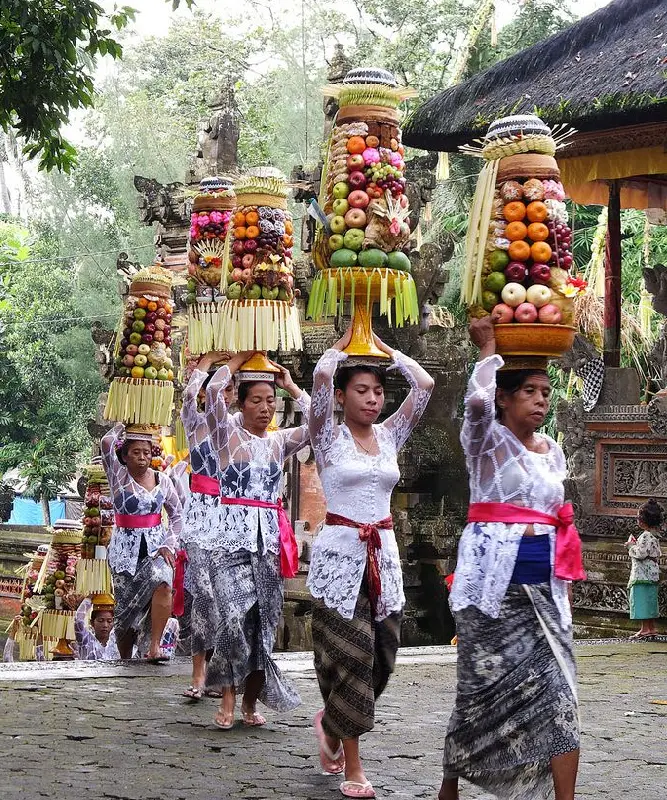
The Mepeed ceremony features sacred rituals rich in meaning :
1. Offerings (Banten)
Arrangements of fresh flowers, sacred rice, and tropical fruits artfully stacked in grand gebogan for ancestral spirits and deities.
2. Prayers
Led by priests and elders, sacred mantras honor ancestors and invoke protection.
3. Symbolic Acts
The procession symbolizes purification, gratitude, and spiritual balance central to Balinese Hinduism.
Read More Festivals & Traditional Ceremonies in Bali: Living Cultural Heritage
📅Timing & Locations
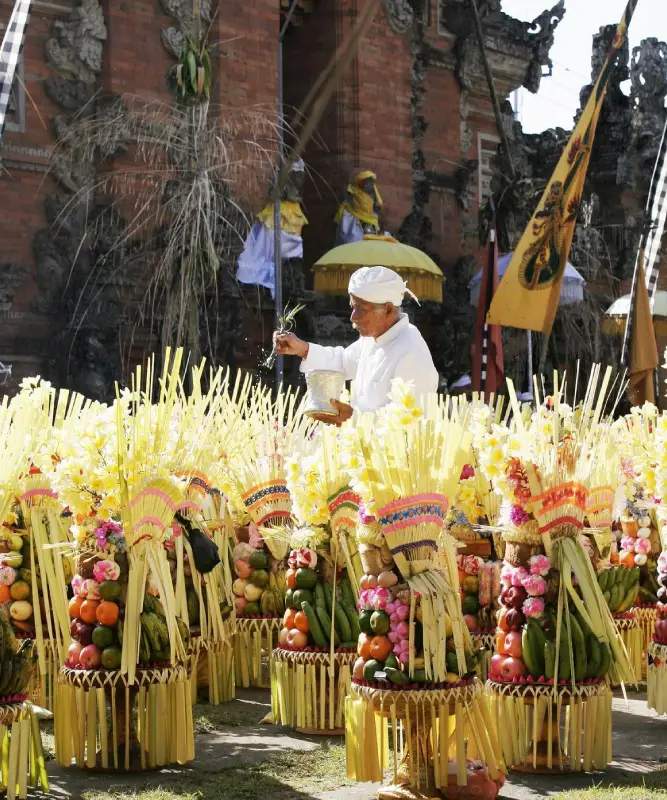
Mepeed is usually celebrated in family compounds or village temples during specific dates in the Balinese calendar. It often occurs on Buda Kliwon days or during Piodalan at Pura Desa Puseh Sukawati, with main routes from Banjar Kawitan to Pura Beji. Sukawati village (Gianyar) is the primary hub, followed by Guwang and Ketewel—easily reached from Ubud (30-45 minutes).
🌺The Philosophy Behind Mepeed
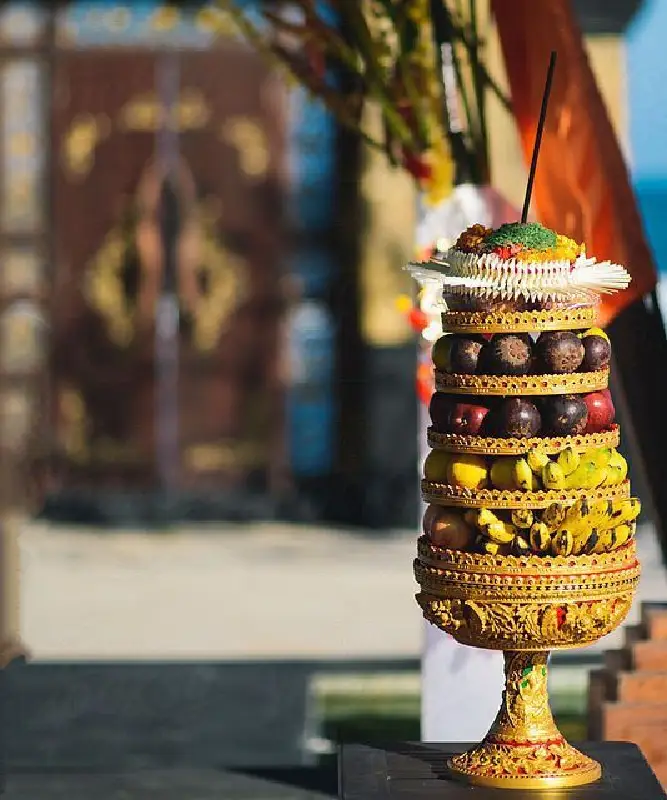
Mepeed is more than a ritual; it reflects Bali’s deep spiritual beliefs. Every offering, prayer, and gesture symbolizes harmony, respect for ancestors, and the cycle of life. Hands-free gebogan balancing represents inner equilibrium, orderly lines show social discipline, and temple processions depict the soul’s path to purity.
Read More Melukat in Bali: Discover Bali’s Sacred Water Purification Ritual
❤️ Experience the Traditional Mepeed Ceremony in Bali
Step into the heart of Balinese culture with the Mepeed ceremony, a unique ritual honoring ancestors and celebrating spiritual harmony. Watch women in white kebaya gracefully balance towering gebogan offerings, listen to gamelan music, and witness sacred prayers that preserve centuries-old traditions.
Don’t miss the chance to visit Sukawati, Guwang, and Ketewel to see this living heritage, capture stunning photos, and feel Bali’s deep spiritual essence Follow @baliedenguide for hidden cultural gems, unique rituals, and authentic Balinese experiences 🤍